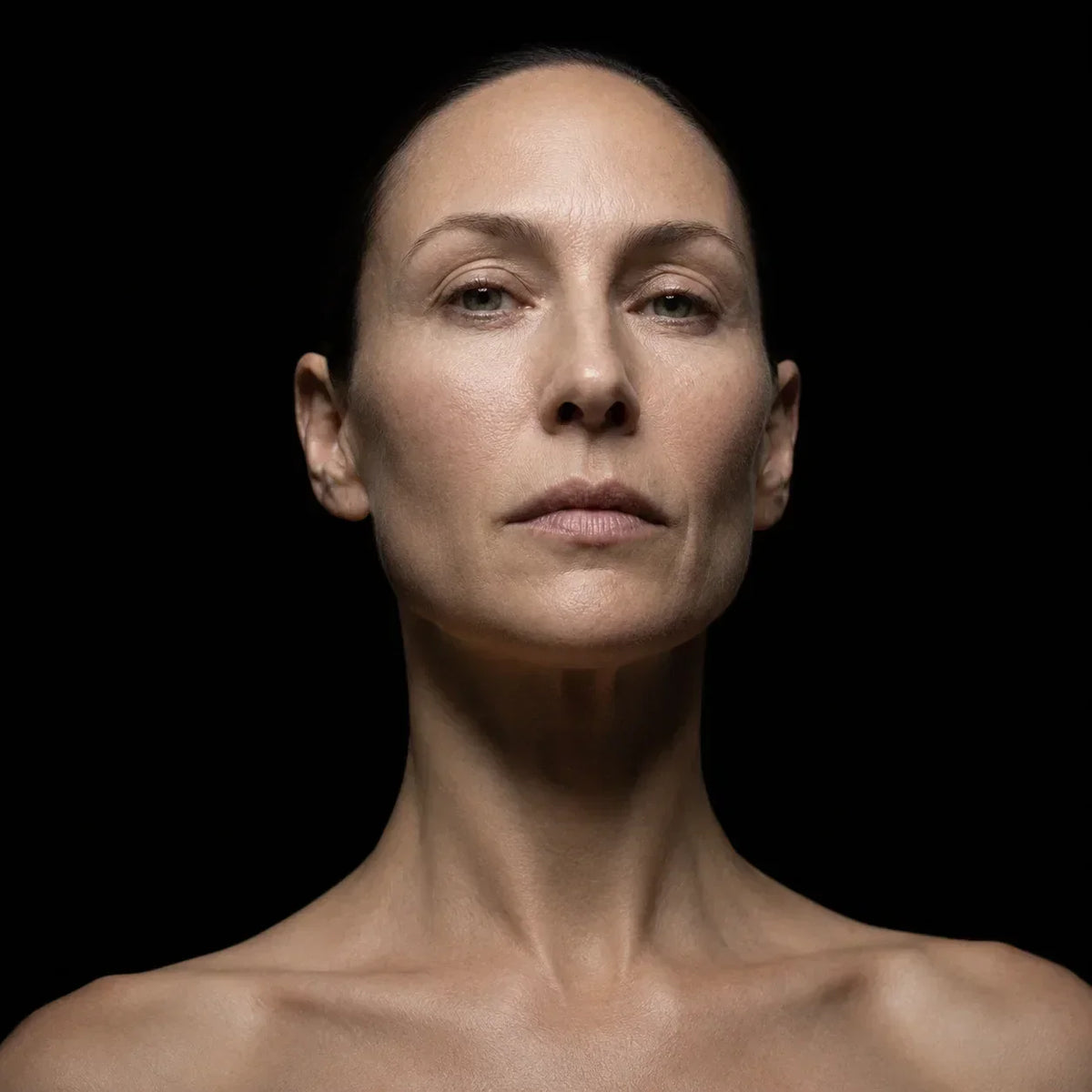
The short answer: facial volume loss can involve shrinking fat compartments, changes in deeper bone support and the redistribution of soft tissue. Thinner, less elastic skin can make those changes more visible. The most useful first step is to distinguish hollowing, tissue descent and skin quality: each calls for a different approach.
Perhaps your cheeks look flatter, your temples more hollow, or the transition beneath your eyes casts a stronger shadow. Understanding what has changed helps you choose care with a realistic purpose—and avoid expecting one cream, supplement or procedure to address every layer.
What does facial volume loss actually mean?
Strictly speaking, volume loss means there is less tissue. In everyday language, the phrase also covers a face that looks less full because its tissues have shifted or its underlying support has changed. Facial ageing involves several interacting layers.[1]
| What changes | What you may notice | The distinction |
|---|---|---|
| Facial fat | Flatter cheeks or hollowing | Some compartments lose volume; redistribution also changes contours. |
| Bone and tissue support | Changing projection, folds or jawline | The framework and position of soft tissues influence apparent fullness. |
| Skin thickness and elasticity | Crepiness, looseness or more visible shadows | Dermal thinning affects skin tissue; it does not establish loss of deeper facial fat. |
| Surface hydration | Dryness and more noticeable fine lines | Temporary surface plumpness differs from deep facial volume. |
Hollowing and sagging can occur together. For a closer look at tissue descent, read why skin sags in your 40s and 50s.
Why do cheeks and temples become hollow?
Facial fat is arranged in distinct compartments at different depths. Their size and position help shape the cheek and the transition beneath the eye.
A small longitudinal CT study followed 19 people over approximately 11 years and found volume reductions in both superficial and deep midface fat. It supports a role for genuine fat loss, while its size limits how confidently its averages can predict an individual face.[2]
Changes are uneven. Upper-cheek hollowing may coexist with greater fullness lower down. Temples can look more recessed, while the lower eyelid–cheek junction becomes more pronounced. A visible shadow alone cannot identify which tissue has changed.
How does facial bone remodelling affect appearance?
The adult facial skeleton continues to remodel. Changes around the eye sockets, midface and jaw can alter the support and projection beneath the soft tissues.
A longitudinal analysis of CT scans from 96 adults, taken about 11 years apart, documented regional skeletal changes. These findings describe a changing framework, rather than a skull that shrinks uniformly.[3]
Bone is one contributor alongside fat, connective tissues and skin. Facial appearance cannot tell you how much bone has changed, and these studies do not establish a universal rate of facial bone loss.

Does menopause make the face look less full?
Menopause-related hormonal changes can contribute to dryness, thinning and reduced skin elasticity. These may make contours look less smooth or resilient.[4] They do not demonstrate that facial fat and bone abruptly disappear at a particular birthday.
There is no universal starting age for visible volume loss. Your original facial shape, body composition and pattern of ageing influence when you notice it.
Can weight loss change facial volume?
Yes. Substantial weight loss can change facial contours, although the extent varies between people and facial regions. Research following bariatric surgery has documented these changes without establishing a simple relationship between kilograms lost and every facial measurement.[5]
What about “Ozempic face”?
This popular phrase describes facial deflation noticed during weight loss. A 2025 retrospective imaging study of 20 people using GLP-1 medicines found reductions in midface volume, with superficial volume loss related to the amount of weight lost.[6]
The study cannot establish whether the medicine itself has an effect independent of weight loss. Discuss concerns with your prescriber before changing treatment; a cosmetic change should be considered alongside the medicine’s health benefits.
What can everyday care improve?
A consistent routine can support the skin over your facial contours. Useful foundations include:
- Sun protection: broad-spectrum SPF 30 or higher, alongside shade and protective clothing.
- Moisturising: improve comfort and surface hydration, which can soften the appearance of fine lines.
- Appropriate nutrition: meet your dietary needs and investigate unintended weight loss or a suspected deficiency.
- Healthy habits: avoid smoking and discuss significant weight changes with the professional overseeing your care.
These measures support skin health; they have not been shown to reverse age-related loss of facial fat or skeletal support.[4]
Give skin quality a place in your routine.
Explore SKINĒDIT PARIS’s collagen-free formula: thirteen actives organised into AGX-3™, NanoLift™ and MitoGen-9™. Discover how the ingredients were selected—and what the independent 90-day evaluation measured for firmness-related skin outcomes, hydration and wrinkles.
Can facial volume be restored?
Selected volume deficits can be addressed through medical procedures. A dermatologist or appropriately qualified plastic surgeon can assess whether your main concern is missing volume, tissue descent, skin laxity or a combination.
Dermal fillers can add fullness in selected areas. The product, placement and amount matter, and approved uses differ by product and jurisdiction. Fillers carry risks: bruising and swelling are common; rare vascular complications can cause tissue damage, blindness or stroke.[7]
When looseness is the main concern, skin-tightening procedures or surgery address a different problem. Results and suitability depend on the degree of laxity and the treatment chosen.[8] Our guide to firming sagging skin without surgery explores that distinction.
Where does AGELESS fit?
AGELESS is intended for skin quality and firmness. Its finished-formula evaluation by COMPLIFE followed 33 women for 90 days, with 32 completing. It assessed skin measures including hydration, elasticity, wrinkle depth and laxity. The study was open-label and had no placebo group, which limits conclusions about causation.[9]
Those results do not demonstrate replacement of facial fat, restoration of facial bone or repositioning of descended tissue. If skin resilience is part of your concern, explore the AGELESS ingredients, evaluation and daily protocol to decide whether that role fits your routine.
When should you seek an assessment?
Arrange medical or dental assessment for rapid unexplained facial change, marked one-sided hollowing, pain, swelling, dental symptoms or unintended weight loss. These deserve an explanation beyond cosmetic ageing.
Frequently asked questions
What causes facial volume loss as you age?
Some facial fat compartments lose volume, while regional bone remodelling, tissue redistribution and skin thinning also change facial contours. Their contribution varies between people.
Can you restore facial volume naturally?
The answer depends on the cause. Addressing undernutrition or unintended weight loss may change facial fullness, but a skincare routine has not been shown to rebuild age-related losses of facial fat or bone.
Does drinking more water restore hollow cheeks?
Correcting dehydration supports normal health. It does not selectively replace a facial fat compartment or reverse skeletal remodelling. Persistent hollowing requires a different assessment from dry skin.
Can AGELESS replace fillers?
No. AGELESS is an oral supplement evaluated for skin outcomes. Fillers are medical procedures used to add volume in selected areas. Their purposes and evidence are different.
Related reading
- Why does skin sag in your 40s and 50s?
- How to firm sagging skin without surgery
- Skin firmness and supplements after menopause
References
- Farkas JP, Pessa JE, Hubbard B, Rohrich RJ. The science and theory behind facial aging. Plastic and Reconstructive Surgery Global Open. 2013.
- Boehm LM, Morgan A, Hettinger P, Matloub HS. Facial aging: a quantitative analysis of midface volume changes over 11 years. Plastic and Reconstructive Surgery. 2021;147:319–327.
- Sifil MK, Kahn DM. Three-dimensional computed tomography–based longitudinal analysis of facial skeletal aging. Aesthetic Surgery Journal. 2026;46:366–371. First published online in 2025.
- American Academy of Dermatology. Caring for your skin in menopause.
- Peters F, et al. Morphological changes of the human face after massive weight-loss due to bariatric surgery. Journal of Cranio-Maxillofacial Surgery. 2020;48:694–699.
- Sharma RK, et al. Radiographic midfacial volume changes in patients on GLP-1 agonists. Otolaryngology–Head and Neck Surgery. 2025;173:360–366.
- US Food and Drug Administration. Dermal fillers (soft tissue fillers).
- American Academy of Dermatology. Many ways to firm sagging skin.
- SKINĒDIT PARIS. AGELESS formulation and COMPLIFE 90-day evaluation summary. Brand-published finished-product evidence; open-label study without a placebo group.
This article provides general information, not an individual diagnosis. Food supplements do not replace a varied, balanced diet and healthy lifestyle.

Jaouad Bentaguena is the founder of SKINĒDIT Paris. He researches and writes the SKINĒDIT Intelligence journal himself — working from peer-reviewed literature and alongside the scientists and clinical partners behind each protocol, to translate deep skin and hair science into something clear enough to act on.
About the author