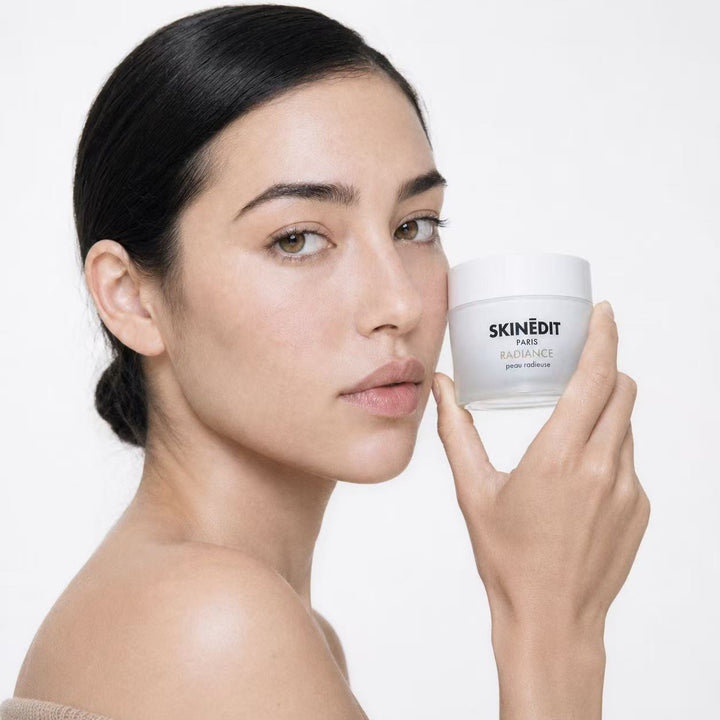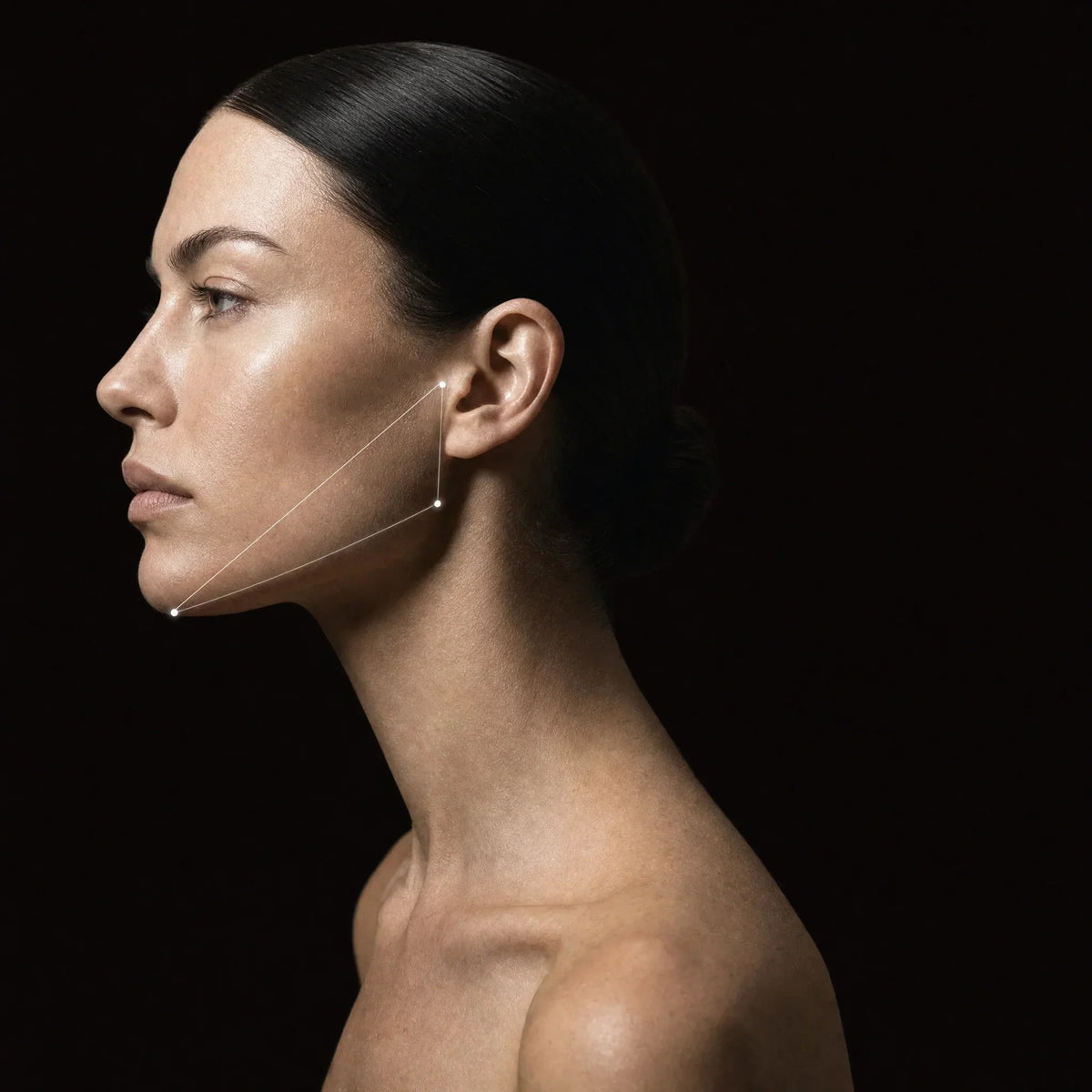
The short answer: mild skin laxity can improve without surgery. Sun protection helps limit further photoageing; moisturisers and retinoids can improve selected skin qualities; and some clinic treatments produce modest tightening. The right choice depends on whether your concern is texture, loose skin, hollowing or tissue descent. Supplements belong in the skin-quality conversation, with results judged against the specific formula’s evidence.
You may want your skin to look smoother and feel more resilient, without committing to a procedure. Or you may be comparing treatments for a changing jawline. Those goals deserve different plans. Start by defining the change you want to see before choosing another product or booking a treatment.
Can sagging skin really be firmed without surgery?
Yes, particularly when laxity is mild. However, firmer-feeling skin, fewer wrinkles and a lifted facial contour are different outcomes. Substantial excess skin and pronounced tissue descent respond less well to non-surgical measures.[1]
Collagen and elastin are part of the explanation, alongside changing fat compartments and deeper support. Our guide to why skin sags in your 40s and 50s explores the anatomy. Here, the focus is what each option can realistically offer.
Which non-surgical options do what?
| Option | Main purpose | What to consider |
|---|---|---|
| Sun protection | Limit further UV-related skin ageing | Prevention remains useful even after visible changes appear. |
| Moisturiser and a suitable retinoid | Hydration, fine lines and photoaged skin | Results depend on formulation, tolerance and continued use. |
| Oral supplements | Selected skin outcomes, such as hydration or elasticity | Look for human evidence on the exact ingredient or finished formula. |
| External radiofrequency or microfocused ultrasound | Tightening in selected cases of laxity | Device choice, anatomy and practitioner experience matter. |
| Laser resurfacing | Texture, wrinkles and some tightening | Balance the expected change against recovery and pigment-related risks. |
What can you do at home?
Make sun protection consistent
Use broad-spectrum SPF 30 or higher, together with shade and protective clothing. A randomized trial found less measured skin ageing with regular sunscreen use than discretionary use over 4.5 years.[2] Think of this as preserving skin quality over time; sunscreen does not lift established jowls.
Consider a retinoid for photoaged skin
Prescription tretinoin has randomized human evidence for reducing fine and coarse wrinkles caused by photodamage. A 2025 meta-analysis included eight trials with 1,361 participants, followed for 16 weeks to two years.[3] These are wrinkle and photodamage outcomes, rather than evidence of repositioning descended facial tissues.
Cosmetic retinol and retinal products are related options, but a tretinoin trial does not validate every serum. Choose according to your skin’s tolerance. Introduce retinoids gradually, use moisturiser and ask a dermatologist about persistent irritation. Avoid retinoids during pregnancy. Seek individual advice if planning pregnancy or breastfeeding.[4]
Keep the routine comfortable enough to maintain
A moisturiser can soften the appearance of dryness and fine lines. Adding several active serums at once may make it harder to identify irritation or judge what helps. Start with a manageable routine, maintain adequate nutrition and avoid smoking. More products do not automatically produce more firmness.

Do supplements help firm sagging skin?
Some defined oral ingredients and formulas have human data for hydration, elasticity or wrinkle measures. The useful questions are what was tested, what changed and how reliably it was measured.
For example, a 2025 collagen meta-analysis found benefits when trials were pooled, but not in its higher-quality or non-industry-funded subgroups.[5] That mixed picture calls for careful product assessment. It does not justify dismissing every collagen product or promising a lift from any supplement.
Read our comparison of supplements for skin firmness and elasticity for the ingredient-level evidence. Nutritional adequacy remains the foundation; supplementing beyond your needs is not automatically beneficial.
What has AGELESS actually measured?
AGELESS has a finished-formula evaluation by independent laboratory COMPLIFE: 33 women aged 35–60 enrolled, and 32 completed 90 days. At day 90, 96.9% of completers reported firmer-feeling skin. This was a questionnaire result, separate from the instrumental measurements of skin hydration, wrinkles, elasticity and laxity.[6]
The evaluation was open-label and had no placebo or parallel control group. It provides product-specific observations, without establishing a facelift-like effect or proving that each ingredient caused the changes.
Discover what makes the formula different.
Thirteen actives, chosen for complementary roles in mineral physiology, the dermal matrix and cellular defence. Explore AGX-3™, NanoLift™ and MitoGen-9™—and the 90-day evaluation behind SKINĒDIT PARIS’s approach to skin firmness.
Which clinic treatments can tighten skin?
Microfocused ultrasound
Microfocused ultrasound delivers heat at selected depths to stimulate tissue remodelling. A 2025 review found improvements in aesthetic assessments and patient satisfaction, but substantial differences between studies and response scales limit certainty. Pain was moderate on average.[7]
For a suitable candidate, the aim is gradual tightening. Ask what magnitude of change is realistic for your face and which device was used in the evidence being discussed.
External radiofrequency
External RF devices heat tissue through an applicator placed against the skin. Clinical literature supports improvements in laxity with selected radiofrequency devices, but platforms and treatment methods vary.[8] Results from one device cannot establish the performance of every RF treatment or home gadget.
Microneedling and RF microneedling
Conventional microneedling creates controlled punctures. Research on facial rejuvenation has focused more on wrinkles and texture than laxity: only three of 21 studies in a 2025 review assessed skin laxity.[9]
RF microneedling adds heat beneath the skin. In October 2025, the FDA warned of reported complications with certain uses, including burns, scarring, fat loss and nerve damage. It recommends a licensed professional trained in the device and advises against home use.[10] Discuss both benefits and risks before proceeding.
Laser resurfacing
Laser resurfacing can improve wrinkles and texture, with some tightening. More intensive treatment can require significant recovery and carries risks including pigment changes and scarring. Your skin tone, pigmentation history and ability to follow aftercare should shape the consultation.[1]
If hollowing is the main concern, explore facial volume loss first. Adding volume and tightening loose skin address different changes.
How should you choose your next step?
- For dryness and fine lines: establish sun protection, moisturising and an appropriate topical routine.
- For an oral addition: assess the finished formula, its evidence and suitability alongside your medicines and existing supplements.
- For visible laxity: ask a dermatologist which tissue is changing, what a procedure can achieve and what recovery involves.
- For marked jowls or excess skin: seek an honest assessment of the limits of non-surgical care before committing to repeated treatments.
If the formulation interests you, the guided AGELESS presentation explores its three systems and the finished-product evaluation in more detail.
Frequently asked questions
Can a cream lift sagging skin?
A moisturiser can temporarily make dry skin look fuller, and suitable retinoids can improve photoaged skin over time. Creams do not remove excess skin or reposition descended facial tissues.
What is the best non-surgical treatment for sagging skin?
There is no single best option. Texture, mild laxity and volume loss require different assessments. The appropriate treatment depends on your anatomy, skin type, goals and acceptable recovery time.
How long does non-surgical firming take?
Hydration effects can appear quickly. Retinoid studies generally assess changes over months, while energy-based treatment results develop gradually. Supplement expectations should follow the specific product’s study; a 90-day evaluation does not guarantee an individual result.
Can AGELESS lift jowls?
AGELESS has been evaluated for skin outcomes, including participant-reported firmness and instrumental skin measures. It has not been shown to mechanically reposition jowls, replace lost facial fat or rebuild facial bone.
Related reading
- Supplements for skin firmness and elasticity: comparing the evidence
- Do collagen supplements work for sagging skin?
- What causes facial volume loss?
References
- American Academy of Dermatology. Many ways to firm sagging skin.
- Hughes MCB, et al. Sunscreen and prevention of skin aging: a randomized trial. Annals of Internal Medicine. 2013;158:781–790.
- Huang HY, Lee LTJ. Tretinoin for photodamaged facial skin: systematic review and meta-analysis of randomized controlled trials. Dermatology Practical & Conceptual. 2025;15(4):5172.
- American Academy of Dermatology. Retinoid or retinol?
- Myung SK, Park Y. Effects of collagen supplements on skin aging: a systematic review and meta-analysis of randomized controlled trials. American Journal of Medicine. 2025.
- SKINĒDIT PARIS. AGELESS formulation and COMPLIFE 90-day evaluation summary. Brand-published finished-product evidence; open-label evaluation without a control group.
- Amiri M, et al. Microfocused ultrasound with visualization effectiveness and safety: a systematic review and meta-analysis. Aesthetic Surgery Journal. 2025;45:NP86–NP94.
- Rohrich RJ, et al. Minimally invasive approach to skin tightening of the face and body: systematic review of monopolar and bipolar radiofrequency devices. Plastic and Reconstructive Surgery. 2022;150:771–780.
- Foppiani JA, et al. Microneedling for facial rejuvenation: a systematic review. Aesthetic Plastic Surgery. 2025.
- US Food and Drug Administration. Potential risks with certain uses of radiofrequency microneedling. Safety communication, 15 October 2025.
This article provides general information and does not replace an individual medical assessment. Food supplements do not replace a varied, balanced diet and healthy lifestyle.

Jaouad Bentaguena is the founder of SKINĒDIT Paris. He researches and writes the SKINĒDIT Intelligence journal himself — working from peer-reviewed literature and alongside the scientists and clinical partners behind each protocol, to translate deep skin and hair science into something clear enough to act on.
About the author