The dermal papilla is a key signalling niche at the base of the hair follicle. Here is how it influences the hair cycle, miniaturisation and shedding—and what it cannot explain on its own.
The dermal papilla is a specialised signalling niche at the base of the hair follicle. It helps coordinate growth by communicating with the epithelial cells that build the hair shaft. It does not act alone, and it is not the universal cause of every form of hair loss — but it is one of the most important control points in follicle biology.
Hair loss is often described as a list of triggers: genetics, hormones, stress, illness, nutrition, medication and age. That list is useful, but incomplete. Different forms of hair loss follow different biological routes. What makes the dermal papilla important is that many of the signals controlling the hair cycle are integrated through this small population of specialised cells at the base of the follicle.
What the dermal papilla is
The dermal papilla is a cluster of specialised mesenchymal cells located at the bottom of the hair follicle, inside the hair bulb. It sits next to the rapidly dividing matrix cells that produce the hair shaft and communicates with them through molecular signals.
Rather than physically building the hair itself, the dermal papilla helps regulate the behaviour of the cells that do. Its signalling contributes to follicle development, hair-cycle transitions and the size and characteristics of the hair fibre produced.

How the dermal papilla participates in the hair cycle
Each scalp follicle repeatedly moves through phases of active growth, regression, rest and shedding. The longest is anagen, when the follicle actively produces a hair shaft. It is followed by catagen, then telogen, before the follicle eventually re-enters growth.
The dermal papilla is an important part of the signalling network that helps coordinate those transitions. It communicates with epithelial stem and progenitor cells in the follicle and releases factors that influence whether growth is maintained or interrupted.
But the cycle is not controlled by one molecule or one cell population. Hair growth depends on continuous communication between the dermal papilla, epithelial cells, stem-cell niches, surrounding dermal tissue and systemic signals.
The signalling network: Wnt, BMP, FGF7 and more
Hair-cycle biology is sometimes reduced to a simple “brake and accelerator” model. That is useful as an illustration, but the real system is more complex.
Wnt/β-catenin signalling plays an important role in follicle development and the transition toward active growth. BMP signalling helps regulate stem-cell quiescence and differentiation, while proteins including Noggin can oppose BMP activity in specific contexts. Dermal papilla cells can also produce factors including FGF7, IGF-related signals and other paracrine molecules that influence surrounding follicular cells.
These pathways interact rather than operating as independent switches. The balance between them changes according to the phase of the hair cycle, the anatomical region of the follicle and the cause of hair loss.
Why the dermal papilla matters in androgenetic alopecia
The dermal papilla is especially important in androgenetic alopecia, the common pattern of progressive hair thinning.
In genetically susceptible follicles, androgens such as dihydrotestosterone interact with androgen receptors in dermal papilla cells. Those cells then alter the paracrine signals they send to neighbouring follicular cells. Research has implicated changes in pathways including Wnt/β-catenin, TGF-β and other growth-regulating factors.
Over repeated cycles, susceptible follicles can undergo miniaturisation: the growth phase becomes shorter and the hairs produced become progressively finer and shorter.
Miniaturisation is not a follicle suddenly switching off. It is a progressive change in the kind of hair that follicle produces.
But not every kind of hair loss is a dermal-papilla problem
This distinction is important.
In telogen effluvium, illness, physiological stress, major weight change, medication, nutritional deficiency or other systemic events can cause an unusually large number of follicles to enter telogen. The dermal papilla remains part of the hair-cycle machinery, but it would be misleading to describe it as the single cause.
In alopecia areata, immune mechanisms are central. In scarring alopecias, inflammatory damage can permanently destroy follicular structures. Androgenetic alopecia, telogen effluvium and autoimmune hair loss therefore should not be collapsed into one mechanism simply because they all affect hair.
The useful conclusion is more precise: the dermal papilla is an important signalling hub, not the universal explanation for hair loss.
When shedding deserves medical investigation
Sudden, substantial or unexplained shedding deserves clinical assessment before assuming the answer is a supplement.
Depending on the history and examination, clinicians may investigate potential contributors such as iron status, anaemia, thyroid dysfunction, medication changes, recent illness, restrictive dieting or other nutritional factors. Broad testing of every vitamin and mineral is not automatically necessary; laboratory work is most useful when it is guided by the pattern of loss and the patient's history.
Patchy loss, scalp pain or inflammation, rapidly progressive thinning, eyebrow or eyelash loss, or other systemic symptoms are also reasons to seek professional evaluation.
Where REVIVAL fits
SKINĒDIT makes REVIVAL, so the commercial relationship should be explicit.
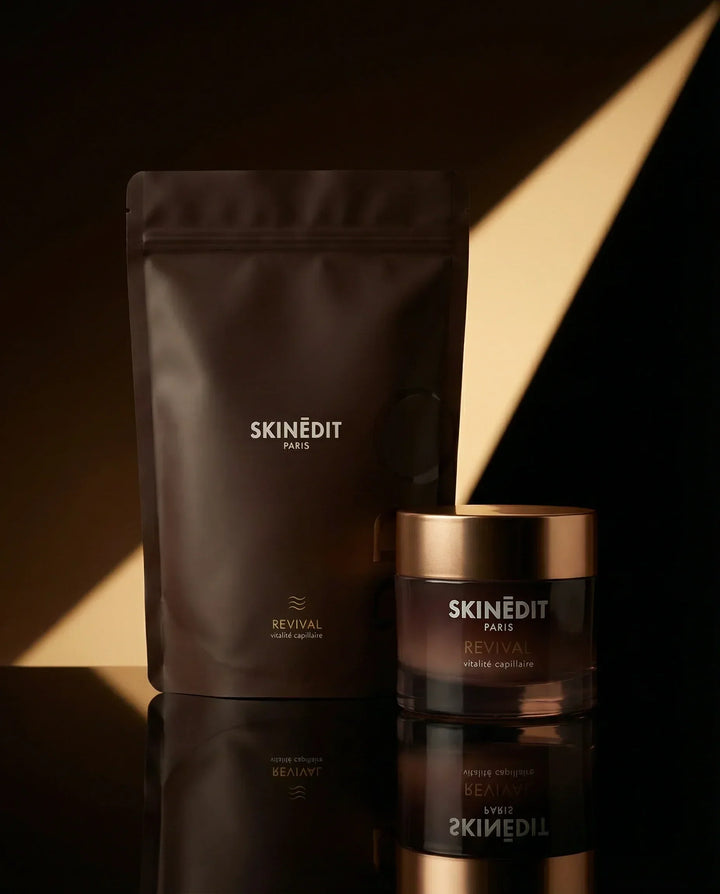
REVIVAL is a 90-day nutritional protocol for thinning, shedding and visible hair density. Its formulation architecture is organised around five areas: follicular signalling, keratin structure, nutritional balance, anchoring and pigmentation.
Two of its signature ingredients have published human data, but those studies need to be described accurately.
AnaGain™ Nu
A peer-reviewed pilot study evaluated oral AnaGain™ Nu in 21 adults with mild-to-moderate hair loss. Participants consumed the ingredient daily for eight weeks, and the investigators reported a reduction in counted hair loss during the intervention.
A separate small gene-expression experiment used topical pea-sprout extract and reported changes in FGF7 and Noggin expression. These are two different experiments. The topical gene-expression result should not be presented as proof that oral REVIVAL directly increases those genes in human dermal papilla cells.
Cynatine® HNS
Cynatine® HNS has also been evaluated in a randomized, double-blind, placebo-controlled trial involving 50 women over 90 days. The studied intervention contained 500 mg of Cynatine® HNS keratin together with vitamins and minerals, and investigators measured hair loss, growth, strength and other hair parameters.
That trial supports the ingredient's evidence base, but it is not a clinical trial of finished REVIVAL, and the studied formulation and daily dose should not be treated as interchangeable with the REVIVAL formula.
REVIVAL is therefore best understood as a nutritional formulation built around documented hair biology and ingredient-level evidence — not as a drug treatment for alopecia and not as proof that every form of hair loss originates in the dermal papilla.
REVIVAL is vegetarian, not vegan, because Cynatine® HNS keratin is derived from sheep wool.
Discover REVIVAL The 90-day protocol for thinning, shedding and visible hair density →
Explore the REVIVAL science experience →
Frequently asked questions
What is the dermal papilla in simple terms?
The dermal papilla is a small cluster of specialised cells at the base of the hair follicle. It sends signals to neighbouring follicular cells and plays an important role in hair growth, cycling and fibre characteristics.
Does the dermal papilla control hair growth?
It is one of the follicle's major signalling centres, but it does not control the hair cycle alone. Hair growth depends on communication between dermal papilla cells, epithelial cells, stem-cell niches and systemic signals.
Is dermal papilla dysfunction responsible for all hair loss?
No. Dermal papilla signalling is particularly important in follicle cycling and androgenetic alopecia, but telogen effluvium, autoimmune alopecia and scarring hair disorders have different biological drivers.
Can a miniaturised follicle grow thicker hair again?
Some miniaturised follicles can respond to treatment while they remain viable, but the likelihood depends on the cause, duration and severity of the condition. Established androgenetic alopecia has evidence-based medical treatments, so progressive thinning is worth discussing with a dermatologist.
Should I get blood tests for hair shedding?
Sudden or significant diffuse shedding should be medically assessed. Depending on the history, clinicians may check blood count, ferritin or thyroid function and investigate other suspected deficiencies or systemic causes rather than ordering the same panel for everyone.
Does REVIVAL have a finished-product clinical trial?
The evidence discussed here comes from studies of individual ingredients such as AnaGain™ Nu and Cynatine® HNS under their own study conditions. Those studies should not be presented as a clinical trial of the finished REVIVAL product.
Related reading
- The 100 causes of hair loss — and what they do not all share
- Why is my hair shedding at 40?
- The best supplement for women's hair thinning
- Explore the dermal papilla and hair cycle in the REVIVAL science experience
References
- Driskell RR, Clavel C, Rendl M, Watt FM. Hair follicle dermal papilla cells at a glance. J Cell Sci. 2011;124:1179–1182. PubMed.
- Premanand A, Reena Rajkumari B. Androgen modulation of Wnt/β-catenin signaling in androgenetic alopecia. Arch Dermatol Res. 2018;310:391–399. PubMed.
- Inui S, Itami S. Molecular basis of androgenetic alopecia: From androgen to paracrine mediators through dermal papilla. J Dermatol Sci. 2011. PubMed.
- Leirós GJ, Attorresi AI, Balañá ME. Androgens and androgen receptor action in skin and hair follicles. Mol Cell Endocrinol. 2017. PubMed.
- Grothe T, Wandrey F, Schuerch C. Clinical evaluation of pea sprout extract in the treatment of hair loss. Phytother Res. 2020. Full text.
- Beer C, Wood S, Veghte RH. A clinical trial to investigate the effect of Cynatine HNS on hair and nail parameters. ScientificWorldJournal. 2014;2014:641723. PubMed.
- Kil MS, Kim CW, Kim SS. Analysis of serum zinc and copper concentrations in hair loss. Ann Dermatol. 2013. Hair-loss laboratory evaluation should be individualized according to clinical context.
Editorial note: This article reviews hair-follicle biology and published ingredient research. It is not medical advice, and nutritional supplements do not replace diagnosis or evidence-based treatment for androgenetic alopecia, alopecia areata, scarring alopecia, thyroid disease, iron deficiency or other medical causes of hair loss.
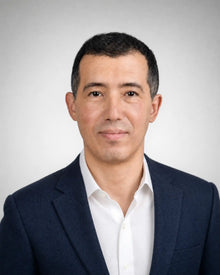
Jaouad Bentaguena is the founder of SKINĒDIT Paris. He researches and writes the SKINĒDIT's Intelligence journal himself — working from the peer-reviewed literature and alongside the scientists and clinical partners behind each protocol, to translate the science of deep skincare into something clear enough to act on.
About the author