The short answer: menopause can affect hair density and texture, but the right response depends on the type of hair loss. A widening part, sudden shedding and a receding hairline need different assessments. Treatment can help preserve or improve hair in some conditions. Nutritional support may have a place, while hormone replacement therapy should not be started solely for hair loss.
You may first notice a smaller ponytail, less volume at the crown or a parting that looks wider in photographs. These changes deserve attention. Understanding the cause gives you a clearer route to treatment and a more considered daily hair routine.
Why can hair change during perimenopause and menopause?
Hair follicles respond to hormones. As oestrogen fluctuates and declines during the menopausal transition, the environment around the follicle changes. Genetics and ageing also influence density, strand thickness and the hair cycle.[1]
This helps explain the timing of midlife hair changes, but does not identify their cause in an individual woman. Female-pattern hair loss may become more noticeable, while illness, restrictive eating or other events can trigger a separate episode of shedding.
If you are noticing changes earlier in the transition, our guide to hair shedding around 40 explores that wider context.

What does menopause-related hair loss look like?
The pattern offers clues, although a scalp examination is needed to confirm the diagnosis.
| What you notice | Possible explanation | Useful next step |
|---|---|---|
| A gradually widening part or thinner crown | Female-pattern hair loss. | Discuss diagnosis and ongoing treatment. |
| A sudden increase in shedding across the scalp | Telogen effluvium. | Review illness, stress, weight loss and medication changes in the preceding months. |
| Shedding alongside an already widening part | More than one process may be present. | Have both the shedding and the underlying pattern assessed. |
| A receding hairline with eyebrow loss | Possible frontal fibrosing alopecia. | Arrange prompt dermatological assessment. |
| Distinct bald patches | Alopecia areata or another localised condition. | Seek a diagnosis rather than assuming menopause explains it. |
Female-pattern loss, temporary shedding and scarring conditions require different management.[2], [3], [4] A painful or inflamed scalp, eyebrow loss or a progressively receding hairline deserves particular attention. Frontal fibrosing alopecia can permanently damage follicles; early treatment aims to limit further loss.[4]
Which blood tests might be useful?
Your history and scalp examination should guide testing. Normal blood results do not exclude female-pattern hair loss, and every woman does not need the same nutrient or hormone panel.[5]
| Clinical clue | What your clinician may consider |
|---|---|
| Heavy periods, recent blood loss or a restricted diet. | A blood count and ferritin to investigate iron status. |
| Unexplained shedding with unusual fatigue, temperature sensitivity or weight changes. | Thyroid function testing. |
| Dietary restriction, absorption problems or other deficiency risks. | Selected nutrient tests based on the history. |
| New coarse facial hair, marked acne or other signs of androgen excess. | A targeted hormonal assessment. |
The aim is to identify a treatable contributor. Correct a documented deficiency with appropriate advice; avoid using an online ferritin target or a long supplement list as a substitute for interpretation.
Which treatments can help?
For female-pattern hair loss
Topical minoxidil is an established treatment. It can help some women preserve or improve density, but continued use is needed to maintain benefit. Temporary extra shedding can occur early on, and scalp irritation is a possible side effect. A dermatologist can advise on suitability and alternatives.[2]
Prescription options may be considered according to the diagnosis and medical history. If pregnancy is still possible during perimenopause, discuss this explicitly: minoxidil should be avoided during pregnancy, when planning pregnancy and while breastfeeding, and some prescription hair-loss medicines are also unsuitable.[2]
For sudden shedding
Telogen effluvium often starts around three months after a trigger. Addressing a continuing cause, such as inadequate nutrition or iron deficiency, matters. When the trigger has resolved, recovery may occur without a specific hair-growth treatment, although restoring visible volume takes time.[3]
For scarring hair loss
The priority is specialist treatment to control the process damaging the follicles. A supplement cannot replace this care.[4]
Does HRT help menopause hair loss?
Current evidence does not support starting hormone replacement therapy solely for hair loss. A 2026 review reached that conclusion after examining HRT and hair research.[6]
There are early findings worth investigating. A small study followed 11 postmenopausal Japanese women receiving HRT and reported improvements in frontal-hairline appearance and hair-plucking strength after six months. However, it had no control group and could not establish HRT as an effective hair-loss treatment.[7]
If HRT is appropriate for other menopausal symptoms, discuss hair changes as part of that consultation. The decision should reflect your overall symptoms, medical history and treatment goals. Do not start, stop or change prescribed hormones based on hair changes alone.
Where can nutritional support fit?
Adequate nutrition belongs in a hair-care plan. A complete supplement is a separate decision from correcting a deficiency, and its evidence needs to match its claims.
A 2026 review of 14 studies involving 967 adults found improvements in selected hair measures with some oral formulas. Results varied, and the pooled total-hair-count result was not statistically significant. These findings do not establish a supplement treatment specifically for menopausal hair loss.[8]
For a closer comparison of ingredients and study quality, see how to choose supplements for women’s hair thinning.
A closer look at your daily hair protocol.
Explore why REVIVAL brings together AnaGain™ Nu pea-sprout extract, Cynatine® HNS keratin and complementary nutrients. Discover the formulation choices, ingredient research and daily routine behind the protocol.
What should you know about REVIVAL’s evidence?
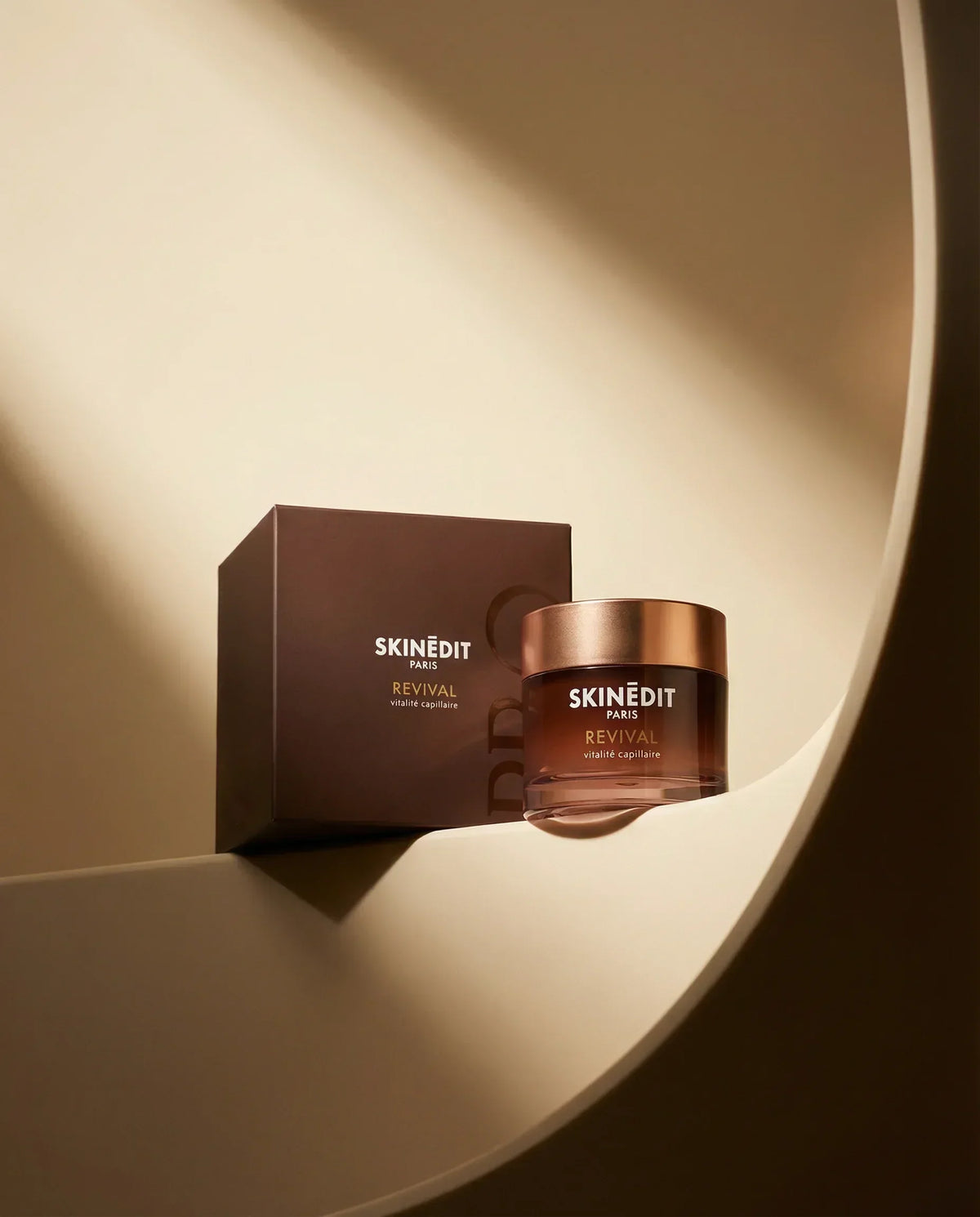
REVIVAL is SKINĒDIT PARIS’s daily oral hair protocol, organised around Signal · Cycle · Anchor · Fibre. Its formulation considers the biology beneath the visible strand and the materials involved in hair-fibre construction.
One relevant study evaluated a Cynatine® HNS formulation in 50 women with stressed or damaged hair and nails over 90 days. Selected hair-pull, hair-cycle and strength measures favoured the active group over placebo. The tested combination included keratin plus vitamins and minerals.[9]
This was an ingredient-complex study, not a trial of the finished REVIVAL formula or a menopause-specific treatment trial. It helps explain ingredient selection without establishing that REVIVAL reverses hormonal thinning. Consider the protocol as nutritional support within a plan that addresses your diagnosis.
Can hair grow back after menopause?
There is room for improvement in some circumstances, but recovery depends on the cause:
- Temporary shedding: hair can recover after the trigger resolves, with visible fullness returning gradually.
- A contributing deficiency: correcting it may help, although another cause of thinning can coexist.
- Female-pattern hair loss: treatment may preserve or improve density; complete restoration is not assured.
- Scarring alopecia: follicles destroyed by scarring generally cannot regrow hair. Treatment focuses on protecting those that remain.
A diagnosis makes expectations more useful than any universal promise of regrowth.[2], [3], [4]
How can you make your routine easier to assess?
Agree on a review point with your clinician. The American Academy of Dermatology advises that minoxidil may need six to twelve months before its benefit can be judged. The 90-day duration of an ingredient study is not a promise that a supplement will change your hair within three months.[2], [9]
- Keep a simple record. Note when the change began and any illness, weight change, medication or treatment changes.
- Take consistent photographs. Use the same parting, lighting and distance each month.
- Protect the hair you have. Gentle handling, less heat and avoiding tight hairstyles can reduce additional damage.[3]
- Review rather than keep adding products. Bring your full supplement list to appointments, and seek reassessment if loss progresses or new symptoms appear.
Frequently asked questions
Is hair thinning inevitable after menopause?
No. The extent and causes of hair changes vary. A persistent change is worth assessing, especially if the part widens, shedding becomes substantial or the hairline recedes.
Can normal blood tests rule out menopause-related hair loss?
No. Blood tests investigate particular contributing conditions. They do not replace examining the scalp for female-pattern thinning, inflammation or scarring.
Should I increase HRT to improve my hair?
Do not change your dose for hair concerns without your prescriber. HRT is not an established treatment for hair loss alone; discuss the timing of the change and your wider menopausal symptoms.
Does biotin help menopausal hair thinning?
Biotin deficiency is rare, and evidence for extra biotin improving hair without deficiency is limited. It can also interfere with some blood tests, so tell your clinician and laboratory if you take it.[10]
Can REVIVAL replace treatment for female-pattern hair loss?
No. REVIVAL is a nutritional supplement. Its ingredient research does not establish it as a replacement for minoxidil or other prescribed care. Review the complete formula with your clinician if you take medication or have a medical condition.
References
- Gupta AK, et al. Menopause and hair loss in women: exploring the hormonal transition. Maturitas. 2025;198:108378.
- American Academy of Dermatology. Thinning hair and hair loss: could it be female-pattern hair loss?
- British Association of Dermatologists. Telogen effluvium. Patient information, 2025.
- American Academy of Dermatology. Frontal fibrosing alopecia: signs and symptoms; diagnosis and treatment.
- American Academy of Dermatology. Hair loss: diagnosis and treatment.
- Lee J, Krishnegowda R, Miteva MI. Hormone replacement therapy and hair: a review for trichologists treating menopausal women. Dermatology. 2026;242:264–267.
- Endo Y, et al. Clinical and phototrichogrammatic evaluation of estradiol replacement therapy on hair growth in postmenopausal Japanese women with female pattern hair loss: a pilot study. International Journal of Women’s Dermatology. 2023;9:e109.
- Alanazi R, et al. Evaluating the effectiveness of commercial oral supplements for hair growth: a systematic review and meta-analysis. Journal of Cosmetic Dermatology. 2026;25:e70817.
- Beer C, Wood S, Veghte RH. A clinical trial to investigate the effect of Cynatine HNS on hair and nail parameters. The Scientific World Journal. 2014;2014:641723.
- NIH Office of Dietary Supplements. Biotin: fact sheet for health professionals.

Jaouad Bentaguena 是 SKINĒDIT Paris 的創辦人。他親自研究並撰寫 SKINĒDIT Intelligence,從同儕審查文獻出發,並與各協議背後的科學家及臨床合作夥伴交流,把皮膚與頭髮的深層科學轉化成清晰、可理解的知識。
關於作者