Which supplements may help skin firmness after menopause? Some oral formulations may improve skin hydration or elasticity, but no supplement is established as a treatment that lifts sagging facial tissues. Collagen peptides have been studied extensively, with mixed conclusions about the strength of their benefits. Vitamin C and copper have essential roles in connective tissue; taking extra is not automatically better. Choose a formula by its ingredients, relevant human evidence and suitability for your routine. [2] [3] [4] [5]
If your skin feels drier, thinner or less resilient around menopause, it is reasonable to reconsider your routine. The useful goal is to understand which changes you can support, what each option has actually been shown to do, and how to make a considered choice.
That starts with distinguishing skin quality—hydration, texture and elasticity—from a change in facial shape. A study measuring one should not be used to promise the other.
Why can skin lose firmness after menopause?
Falling oestrogen is associated with changes in skin collagen, thickness and moisture retention. Cumulative sun exposure and chronological ageing also contribute. Together, these changes can make skin feel less supple and look more lined or slack. They do not happen at the same pace in every woman. [1]
Facial sagging also involves tissues beneath the skin, including fat compartments and retaining structures. Improving hydration or a measured elasticity score does not necessarily reposition those tissues. For a closer look at the lower face, read whether supplements can help jowls.

Which supplements are worth considering?
| Option | What supports its use? | What should you check? |
|---|---|---|
| Hydrolysed collagen peptides | Human trials report improvements in selected hydration and elasticity measures; reviews disagree about how robust the benefits are. [2] [3] | The specific preparation, daily amount, study quality and outcome measured. |
| Vitamin C and copper | Established roles in normal collagen formation and connective-tissue biology. [4] [5] | Your overall intake. Essential biological roles do not prove that extra amounts tighten adequately nourished skin. |
| Selected silicon preparations | A small controlled study of choline-stabilised orthosilicic acid reported improvements in skin surface and mechanical properties. [6] | The exact silicon form. Results cannot automatically be transferred to other materials. |
| Complete skin formulations | Evidence may include studies on individual ingredients and a separate evaluation of the finished formula. | Which product was tested, whether there was a comparison group, and whether results were measured or self-reported. |
Is collagen worth taking after menopause?
Collagen is a reasonable option to investigate for skin quality, but the evidence deserves a balanced reading.
A 2026 meta-analysis covering 35 trials and 2,534 participants reported average improvements in hydration, elasticity and water-loss measures. The authors also described substantial differences between studies and generally short follow-up. [2]
A 2025 meta-analysis reached a more sceptical conclusion: although the pooled results were positive, benefits were not statistically significant in its higher-quality or non-industry-funded subgroups. [3]
The practical reading is that some studied preparations may help, while the size and reliability of the benefit remain uncertain. These reviews do not establish that collagen reverses postmenopausal facial sagging, or that every product sold as collagen will perform alike.
For a fuller comparison, see collagen supplements and sagging skin: what the research measures.
How do you choose a formula for menopausal skin?
Look for enough detail to connect the formulation to your goal. A long ingredient list is less useful than a clear explanation of what was selected and why.
- Start with the outcome. Hydration, elasticity, wrinkle depth and perceived firmness are different measures. Choose evidence relevant to what you hope to improve.
- Check the exact ingredients. A trial on one peptide blend or silicon preparation does not validate every material in the same category.
- Distinguish ingredient research from product testing. A finished-formula evaluation provides information about the combination people actually take; its study design still matters.
- Read the population and timeframe. Research in adults with photodamaged skin is not automatically a trial in postmenopausal women.
- Consider daily use. Check directions, ingredient amounts, dietary preferences, cost and compatibility with products you already take.
For example, the frequently cited silicon trial studied choline-stabilised orthosilicic acid in 50 women over 20 weeks. It did not test Mesoporosil®, the silicon material used in AGELESS. The distinction should remain visible when discussing the formula. [6]
How does AGELESS approach skin firmness?
AGELESS brings thirteen actives together in a daily oral formula. Its formulation considers connective-tissue cofactors, the dermal matrix and antioxidant support, with ingredients including vitamin C, copper, Mesoporosil®, Ceramosides®, coenzyme Q10 and astaxanthin.
It contains no collagen. That describes its formulation choice; it does not establish superiority over collagen peptides. The relevant questions are why its ingredients were selected and what the complete formula's evaluation can tell you.
What did the 90-day COMPLIFE® evaluation report?
The independent, open-label evaluation enrolled 33 women aged 35–60; 32 completed the 90-day protocol. SKINĒDIT's published study summary reports that 96.9% of completers felt their skin was firmer at day 90. This was participant feedback, not a 96.9% increase in measured firmness. [7]
The evaluation also included instrumental measurements of skin elasticity, hydration, laxity and wrinkle depth. Those measurements are separate from the questionnaire. The published summary does not identify a postmenopausal subgroup, so these results should not be presented as proof specifically for menopausal sagging. These published results do not establish that AGELESS is better than a competing supplement.
Structure · Matrix · Cellular Energy
Your goal is firmer-looking skin and a routine you can sustain. Discover why SKINĒDIT selected thirteen actives for AGELESS, how they fit together, and the 90-day evaluation of the complete formula.
What should sit alongside a skin supplement?
A useful routine gives each step a clear job:
- Protect: use broad-spectrum SPF 30 or higher on exposed skin and limit excessive sun exposure.
- Moisturise: adapt cleansing and moisturising to dryness and sensitivity; comfortable skin matters.
- Review topical care: a dermatologist can help you consider a retinoid or other appropriate treatment.
- Review nutrition: maintain a varied diet and adequate protein, and address a suspected deficiency with appropriate advice.
- Choose oral support deliberately: decide what it adds to the routine, and avoid stacking several formulas with overlapping ingredients.
Dermatology guidance supports sun protection and adapted skincare during menopause. Supplements do not replace prescribed menopause care or treatment for an underlying condition. [1]
If you take medication, ask a pharmacist or clinician to check the full formula. In particular, AGELESS contains vitamin K2: anyone taking warfarin or a similar vitamin-K-antagonist anticoagulant should seek prescribing advice before adding it. [8]
How long should you assess a skin supplement?
Use the timeframe of the relevant study, rather than a universal promise. AGELESS was evaluated over 90 days; the silicon study discussed above lasted 20 weeks. Neither duration guarantees an individual result. [6] [7]
If you track your own experience, keep lighting and camera distance consistent and note changes in dryness, texture and perceived firmness separately. Personal photographs can help you review a routine, but cannot isolate a supplement's effect from changes in skincare, weather or other factors.
Frequently asked questions
What is the best supplement for sagging skin after menopause?
No single formula has been established as the best. Compare the exact ingredients, relevant human studies and finished-product evidence. Improvements in hydration or elasticity should not be interpreted as proof that a supplement lifts sagging facial tissue.
Can collagen supplements improve firmness after menopause?
Some trials report better skin elasticity and hydration, but systematic reviews disagree about how reliable those benefits are. Much of the research is not specific to menopause. A studied preparation may be worth considering with realistic expectations. [2] [3]
Can vitamin K2 tighten facial skin?
Vitamin K has roles in bone-related proteins and normal blood clotting. That biology does not demonstrate facial lifting or preservation of facial bone. K2 should not be chosen on the promise that it will rebuild the jawline. [8]
Has AGELESS been studied specifically in menopausal women?
The published COMPLIFE® summary describes women aged 35–60, with 32 completing 90 days. It does not provide a separately analysed postmenopausal group. The results therefore describe the evaluated group, rather than establishing a menopause-specific effect. [7]
Can I take AGELESS with collagen?
There is no need to assume that combining products gives better results. Check the complete labels, overlapping nutrients, allergens and any medication interactions with a pharmacist or clinician. The AGELESS evaluation does not establish an added benefit from combining it with collagen.
Can a skin supplement replace HRT?
No. A food supplement is not a substitute for prescribed menopausal hormone therapy. Decisions about HRT belong in a discussion of your symptoms, medical history and individual benefits and risks with a qualified clinician.
For the broader framework behind evaluating oral skincare, read what the evidence says about beauty supplements.
References
- American Academy of Dermatology. Caring for your skin in menopause. Dermatologist guidance on menopausal skin changes and care.
- Batool A, Abbas MS, Farooq R, et al. Oral collagen peptides and skin rejuvenation: a systematic review and an updated meta-analysis of randomized controlled trials. Journal of Cosmetic Dermatology. 2026;25:e71041.
- Myung SK, Park Y. Effects of collagen supplements on skin aging: a systematic review and meta-analysis of randomized controlled trials. The American Journal of Medicine. 2025. doi:10.1016/j.amjmed.2025.04.034.
- NIH Office of Dietary Supplements. Vitamin C: fact sheet for health professionals.
- NIH Office of Dietary Supplements. Copper: fact sheet for health professionals.
- Barel A, Calomme M, Timchenko A, et al. Effect of oral intake of choline-stabilized orthosilicic acid on skin, nails and hair in women with photodamaged skin. Archives of Dermatological Research. 2005;297:147–153.
- SKINĒDIT PARIS. AGELESS: published summary of the 90-day COMPLIFE® evaluation. Manufacturer-reported study summary, including design, participant numbers, instrumental outcomes and self-assessment; not an independently published journal article.
- NIH Office of Dietary Supplements. Vitamin K: fact sheet for health professionals, including interactions with vitamin-K-antagonist anticoagulants.
Editorial note: this article is published by SKINĒDIT PARIS, the maker of AGELESS. Ingredient research and finished-product evaluations answer different questions. Individual results vary. Food supplements do not replace a varied, balanced diet, a healthy lifestyle or medical care.

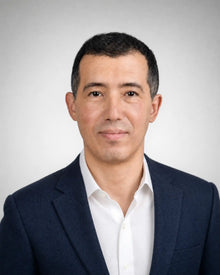
Jaouad Bentaguena 是 SKINĒDIT Paris 的創辦人。他親自研究並撰寫 SKINĒDIT Intelligence,從同儕審查文獻出發,並與各協議背後的科學家及臨床合作夥伴交流,把皮膚與頭髮的深層科學轉化成清晰、可理解的知識。
關於作者