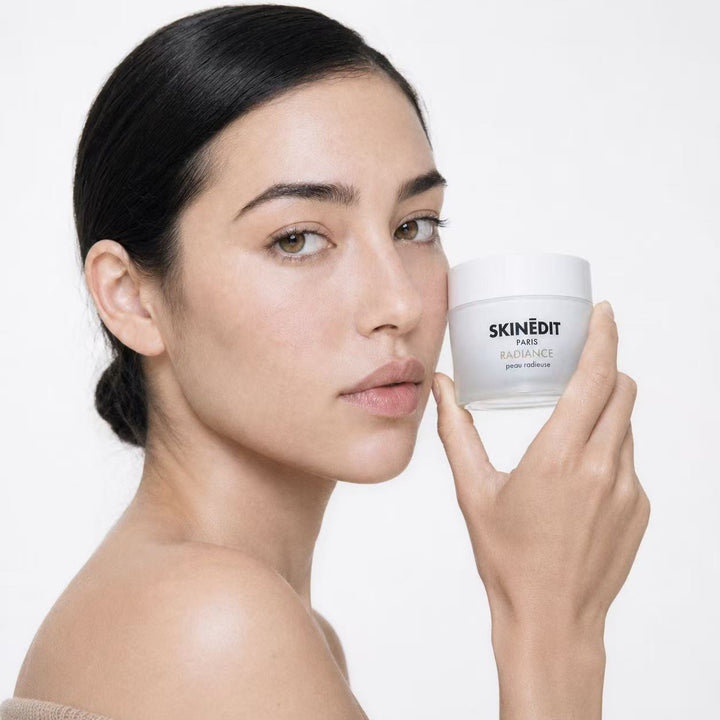
Topical and ingestible skincare can play different roles in the same routine. Moisturisers, sunscreen and appropriate topical treatments address specific needs at the skin or scalp. Selected oral ingredients have research for outcomes such as hydration, elasticity and pigmentation, while nutrition also matters when a deficiency is present. The useful comparison is what each product can contribute to your particular concern.
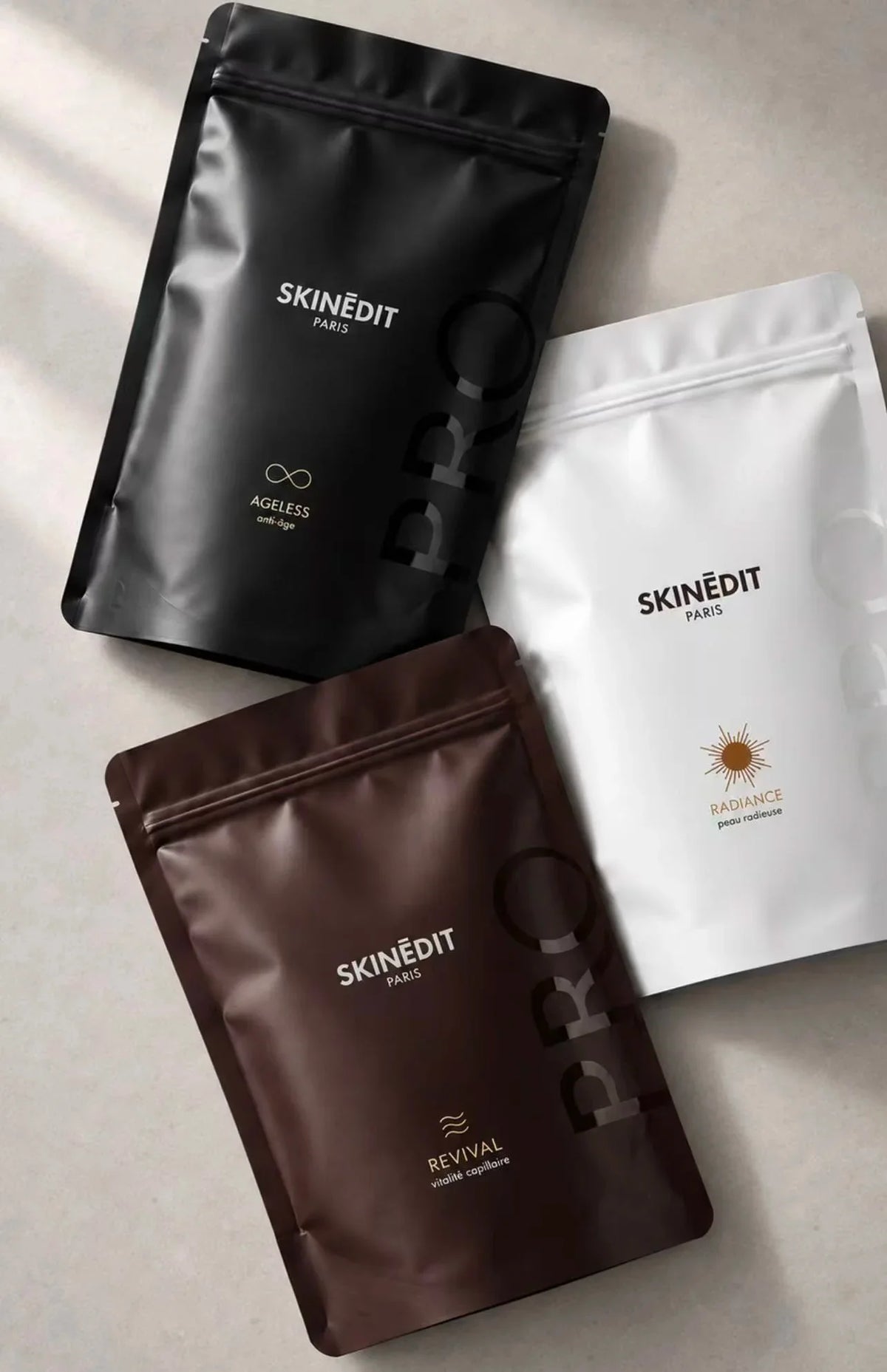
If you already use a serum, moisturiser and sunscreen, adding a supplement should have a clear purpose. This guide compares the two routes for firmness, dark spots and thinning hair, and explains where AGELESS, RADIANCE and REVIVAL may fit.
Topical vs ingestible skincare: the main difference
Topical skincare is applied to the skin or scalp. Ingestible skincare, often called nutricosmetics, is taken orally. Its ingredients undergo digestion, absorption and metabolism before their components can become available to tissues through circulation.
Neither route guarantees effectiveness. A topical product needs the right ingredient and formulation for its target; an oral product needs evidence beyond the fact that its ingredients can be absorbed.
| Your concern | Topical role | Possible oral role |
|---|---|---|
| Dryness | Moisturising and reducing water loss. | Some studied ingredients improve hydration; they do not replace barrier care. |
| Sun exposure | Sunscreen, alongside shade and protective clothing. | A beauty supplement does not replace sun protection. |
| Wrinkles and firmness | Suitable retinoids can improve signs of photoageing. | Selected formulations have skin measurements to assess; results cannot be assumed from an ingredient list. |
| Dark spots | Sun protection and treatment suited to the type of pigmentation. | Defined oral formulations may offer additional pigmentation support. |
| Thinning hair | Topical minoxidil is an established option for diagnosed pattern hair loss. | Correcting a deficiency when present; selected ingredients have research for particular hair measures. |
Can topical skincare act beyond the surface?
Yes, depending on the active and formulation. The outermost skin layer, the stratum corneum, limits penetration. The frequently cited 500 Dalton rule describes the difficulty larger molecules have crossing intact skin by passive diffusion.[1] It is a useful guide to delivery, not an absolute test of whether every topical ingredient works.
Tretinoin provides a clear example. A 2025 meta-analysis of eight controlled trials found improvements in fine and coarse wrinkles in photodamaged facial skin.[2] A separate two-year trial also reported an increase in a marker of collagen synthesis compared with the control treatment.[3] These findings concern tretinoin; they should not be transferred automatically to every cosmetic retinol cream.
Equally, deep penetration is not the goal of every useful product. A moisturiser can help the skin barrier, and sunscreen performs its protective role without needing to rebuild tissue beneath it.
Which approach makes sense for firmness?
Begin by distinguishing fine lines, dryness and changes in elasticity from a loss of facial volume or tissue descent. These are related aspects of ageing, but they are not the same outcome.
Topical tretinoin has evidence for photoaged skin. Oral collagen peptides have also been studied: a 2026 review reported improvements in hydration and elasticity, while a 2025 review found that benefits were not significant in its higher-quality or non-industry-funded subgroups.[4] [5] The evidence deserves product-specific interpretation.
Neither finding establishes a treatment that mechanically lifts descended tissue or recreates lost facial anatomy. Our guide to supplements for firmness and elasticity explains what to examine in an oral formula.

What about dark spots and uneven tone?
Sun protection remains central. For melasma, dermatologists commonly combine it with appropriate topical treatment. Tinted sunscreen containing iron oxides may be useful when visible light is relevant.[6] The choice of treatment depends on the pigmentation involved, rather than on a general preference for creams or capsules.
Some defined oral formulations have pigmentation data. A 12-week randomised, placebo-controlled study of BELIGHT³™ reported improvements in selected pigmentation measurements. The study excluded melasma, and its results concern that particular blend.[7]
RADIANCE includes BELIGHT³™ within a broader formulation. That ingredient research is relevant to its design, but is not a finished-product RADIANCE trial. Read more about dark spots and nutritional support.
Which route is more relevant to thinning hair?
First establish the cause. Progressive thinning, increased shedding and breakage can need different responses. For female-pattern hair loss, topical minoxidil is an established treatment; it demonstrates that a topical can influence the follicle rather than simply coat the hair.[8]
Oral support addresses a different question. A documented deficiency may need correction, while some defined hair formulations have studies of selected outcomes. For example, Cynatine® HNS with vitamins and minerals was assessed in a 90-day placebo-controlled trial in 50 women.[9] This was not a finished REVIVAL trial or proof of treatment for every cause of hair loss.
For the practical distinctions, read why hair may start shedding at 40.
Explore the formulas behind an internal routine.
AGELESS for firmness. RADIANCE for complexion clarity. REVIVAL for hair vitality. Discover the ingredients, research and daily routine behind each protocol, and consider what belongs alongside your skincare.
Where do AGELESS, RADIANCE and REVIVAL fit?
SKINĒDIT PARIS develops separate formulations because firmness, complexion clarity and hair vitality involve different concerns. The product pages let you inspect the complete formula and the reasoning behind its ingredients.
AGELESS alongside a firmness routine
AGELESS brings together thirteen actives around structural physiology, the dermal matrix, and cellular energy and antioxidant defence. Its finished formula underwent an independent 90-day COMPLIFE® evaluation, with 33 women enrolled and 32 completing. The evaluation was open-label and single-arm, without a placebo or parallel control, so it cannot establish how much change the product caused.[10] Discover AGELESS and explore its formulation and results.
RADIANCE alongside complexion care
RADIANCE combines BELIGHT³™ with ingredients including glutathione, L-cystine and selenium, selected around pigmentation and oxidative stress. Its intended role is additional oral support alongside sun protection and appropriate skincare. The evidence for each ingredient remains distinct from evidence for the whole product. Explore the complete RADIANCE formulation.
REVIVAL alongside a hair-care plan
REVIVAL combines AnaGain™ Nu pea-sprout extract, Cynatine® HNS keratin and supporting nutrients around follicular signalling and hair-fibre biology. Its relevance depends on the individual concern and wider treatment plan. Discover REVIVAL and the ingredients behind its daily protocol.
Does using both routes produce better results?
It can be reasonable to combine products with complementary purposes. Sunscreen addresses exposure, a moisturiser supports barrier care, and an oral formulation may address a separate nutritional or cosmetic goal.
However, there is no universal evidence that every topical-plus-supplement combination outperforms either product alone. The specific combination would need to be studied to establish an added effect.
SKINĒDIT's Deep Skincare approach brings local care and internal physiology into the same conversation. It does not assign creams or supplements a fixed percentage of the skin they can influence.
How do you build a coherent routine?
- Choose one priority. Decide whether you are addressing dryness, fine lines, pigmentation or a hair change.
- Keep the appropriate foundation. Maintain sun protection and suitable skincare; continue prescribed treatment unless your clinician advises otherwise.
- Give an addition a specific purpose. Check the complete formula, daily serving and research relevant to your concern.
- Review suitability. Consider allergies, duplicated nutrients and medicines. Ask a clinician or pharmacist about supplements if you have a medical condition, are pregnant or are breastfeeding.[11]
For a closer comparison of oral options, see our guide to choosing skin and hair supplements.
How long should you allow before assessing a change?
The outcome matters more than the delivery route. Hydration can change sooner than wrinkles or hair density. The tretinoin trials in the 2025 review ran from 16 weeks to two years; the BELIGHT³™ study assessed outcomes at 12 weeks. These are study periods, not guaranteed deadlines for visible results.
Track the concern you started with, ideally under consistent lighting. Personal photographs can help you observe changes, but cannot establish which product caused them. Seek assessment for progressive hair loss or unexplained skin changes.
Frequently asked questions
Can a collagen supplement replace a retinoid?
They are different interventions with different evidence. Collagen studies commonly assess hydration and elasticity; topical tretinoin has controlled evidence for photodamaged skin. One should not be assumed to reproduce the other's effects.
Do creams only work on the skin's surface?
No. Effects depend on the active and formulation. Some topical treatments influence deeper skin biology, while surface functions such as moisturising and sun protection remain valuable in their own right.
Can a beauty supplement replace sunscreen?
No. An oral product does not provide a substitute for sunscreen, shade or protective clothing. Pigmentation and skin-ageing routines should retain appropriate sun protection.
Do I need all three SKINĒDIT protocols?
No. Explore the formula relevant to your priority first. The Three Protocols brings the separate products together for people interested in all three concerns; the combination is not necessary for everyone or proven to multiply their effects.
Related reading
References
- Bos JD, Meinardi MMHM. The 500 Dalton rule for the skin penetration of chemical compounds and drugs. Experimental Dermatology. 2000;9:165–169.
- Huang HY, Lee LTJ. Tretinoin for photodamaged facial skin: systematic review and meta-analysis of randomized controlled trials. Dermatology Practical & Conceptual. 2025;15:5172.
- Kang S, Bergfeld W, Gottlieb AB, et al. Long-term efficacy and safety of tretinoin emollient cream 0.05% in the treatment of photodamaged facial skin: a two-year, randomized, placebo-controlled trial. American Journal of Clinical Dermatology. 2005;6:245–253.
- Batool A, Abbas MS, Farooq R, et al. Oral collagen peptides and skin rejuvenation: a systematic review and an updated meta-analysis of randomized controlled trials. Journal of Cosmetic Dermatology. 2026;25:e71041.
- Myung SK, Park Y. Effects of collagen supplements on skin aging: a systematic review and meta-analysis of randomized controlled trials. The American Journal of Medicine. 2025;138:1264–1277.
- American Academy of Dermatology. Melasma: Diagnosis and treatment.
- Pouchieu C, Pourtau L, Gaudout D, et al. Effect of an oral formulation on skin lightening: results from in vitro tyrosinase inhibition to a double-blind randomized placebo-controlled clinical study in healthy Asian participants. Cosmetics. 2023;10:143.
- American Academy of Dermatology. Thinning hair and hair loss: Could it be female pattern hair loss?
- Beer C, Wood S, Veghte RH. A clinical trial to investigate the effect of Cynatine HNS on hair and nail parameters. The Scientific World Journal. 2014;2014:641723.
- SKINĒDIT PARIS. AGELESS: published summary of the 90-day COMPLIFE® evaluation. Manufacturer-published summary of an independent, open-label, single-arm finished-product evaluation.
- NIH Office of Dietary Supplements. Dietary supplements: What you need to know.


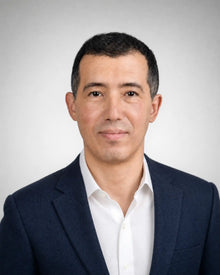
Jaouad Bentaguena is the founder of SKINĒDIT Paris. He researches and writes the SKINĒDIT Intelligence journal himself — working from peer-reviewed literature and alongside the scientists and clinical partners behind each protocol, to translate deep skin and hair science into something clear enough to act on.
About the author