A flat brown mark where a pimple used to be often suggests post-inflammatory hyperpigmentation rather than a scar. A persistent depression or raised area raises a different question. Knowing whether you are looking at colour, texture or both helps you choose skincare more precisely. [1,5]
The breakout has settled, yet you reach for concealer in the same place every morning. A few lingering marks on the cheek, chin or jawline can make skin seem unsettled long after the pimple has gone. Before adding another serum, identify the change you want to address.
Dark mark or acne scar: what is the difference?
These observations can help you describe your concern. They cannot replace an examination.
- A flat brown mark: colour has changed but the surface remains smooth. Following a pimple, this may be post-inflammatory hyperpigmentation, involving extra melanin in the affected area.
- A pink, red or purplish mark: residual redness is not necessarily brown pigmentation. It needs a different assessment, especially when skin remains warm or sensitive.
- A depression or raised area: the texture has changed. Scarring can coexist with discolouration, but complexion-focused skincare alone does not address every change in skin relief.
Flat marks may fade over time. Depressed or raised scars deserve a specific discussion with a dermatologist if you want to improve them. [5]
Why does a pimple leave a brown mark?
Inflammation can stimulate melanin production, leaving colour behind after the blemish settles. This can happen in every skin tone, but it tends to be more pronounced and persistent in darker skin. Sun exposure can deepen the colour. [2,7]
A darker mark does not mean the area needs more cleansing. Scrubbing harder can add irritation to skin that is already under pressure. A comfortable, consistent routine is a more considered starting point.
Build a routine for marks after breakouts
1. Address breakouts that are still appearing
New pimples can leave new marks. Seek advice for persistent, painful or scarring acne instead of focusing every step on pigmentation. Avoid picking and tell your clinician about products that irritate your skin. [6]
2. Make daily protection consistent
Use broad-spectrum SPF 50+ on exposed areas, alongside shade and a hat when needed. Reapply outdoors and after swimming or sweating. A tinted formula containing iron oxides can also be useful for visible-light protection, particularly for skin prone to hyperpigmentation. [2,3,7]
3. Choose targeted care your skin tolerates
Azelaic acid or selected vitamin C preparations are options to discuss with a professional. Introduce changes gradually rather than layering several exfoliants. An unsuitable peel or laser procedure can worsen pigmentation, so seek individual advice first. [2,3,7]
For a closer look at formulations, read our guide to choosing a dark-spot serum.
How long do brown marks after pimples last?
Timing depends on pigment depth, skin tone and ongoing inflammation. The American Academy of Dermatology notes that a mark a few shades darker than your natural tone will usually fade within six to twelve months once its cause is controlled; deeper pigmentation can last longer. This is a guide, not a personal deadline. [3]
Take unfiltered photographs in the same light at regular intervals. Track new breakouts, the colour of older marks and skin comfort separately. One flattering photograph cannot tell you whether a routine is working.
RADIANCE: another dimension of your beauty ritual
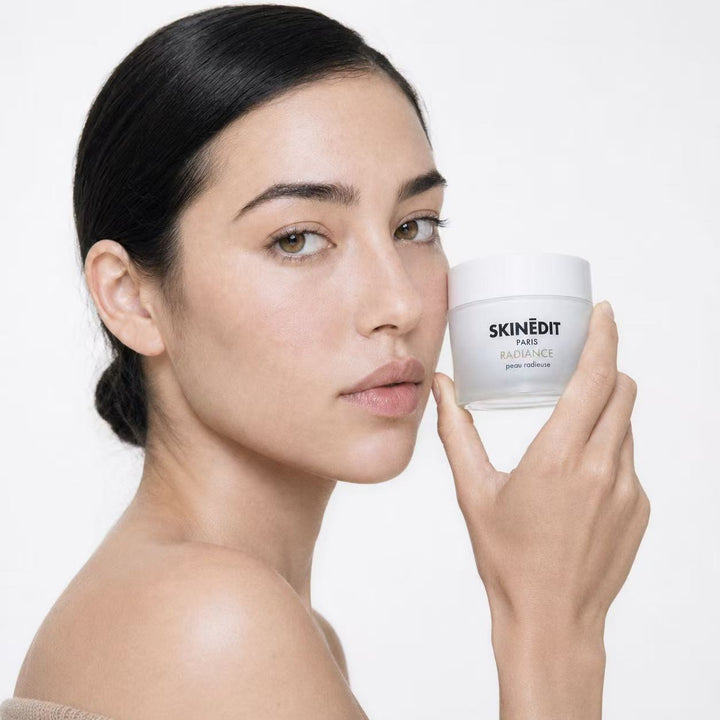
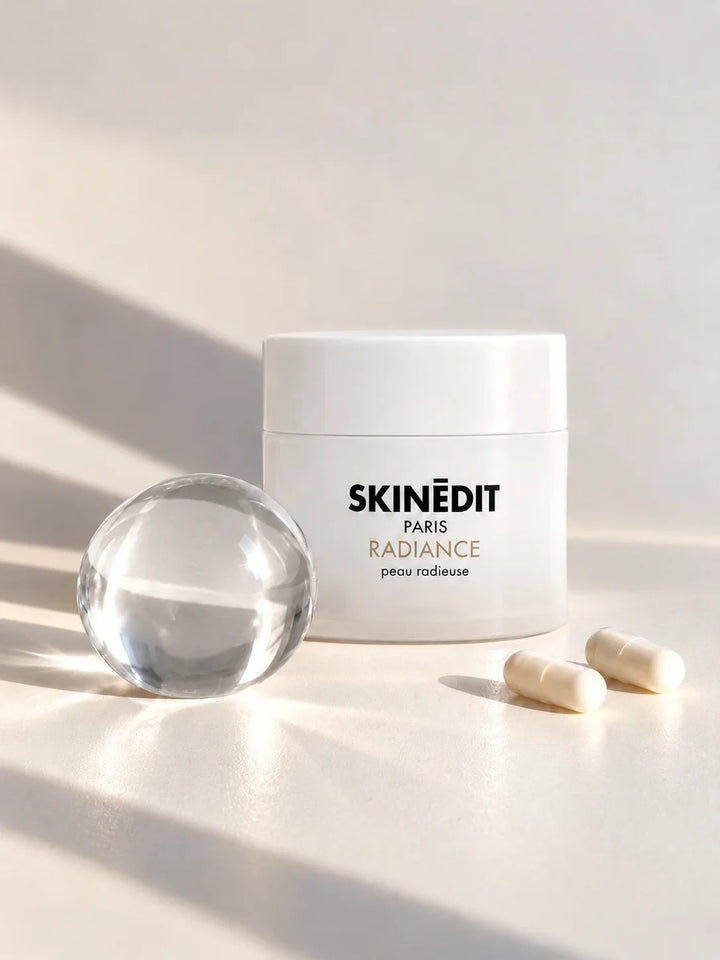
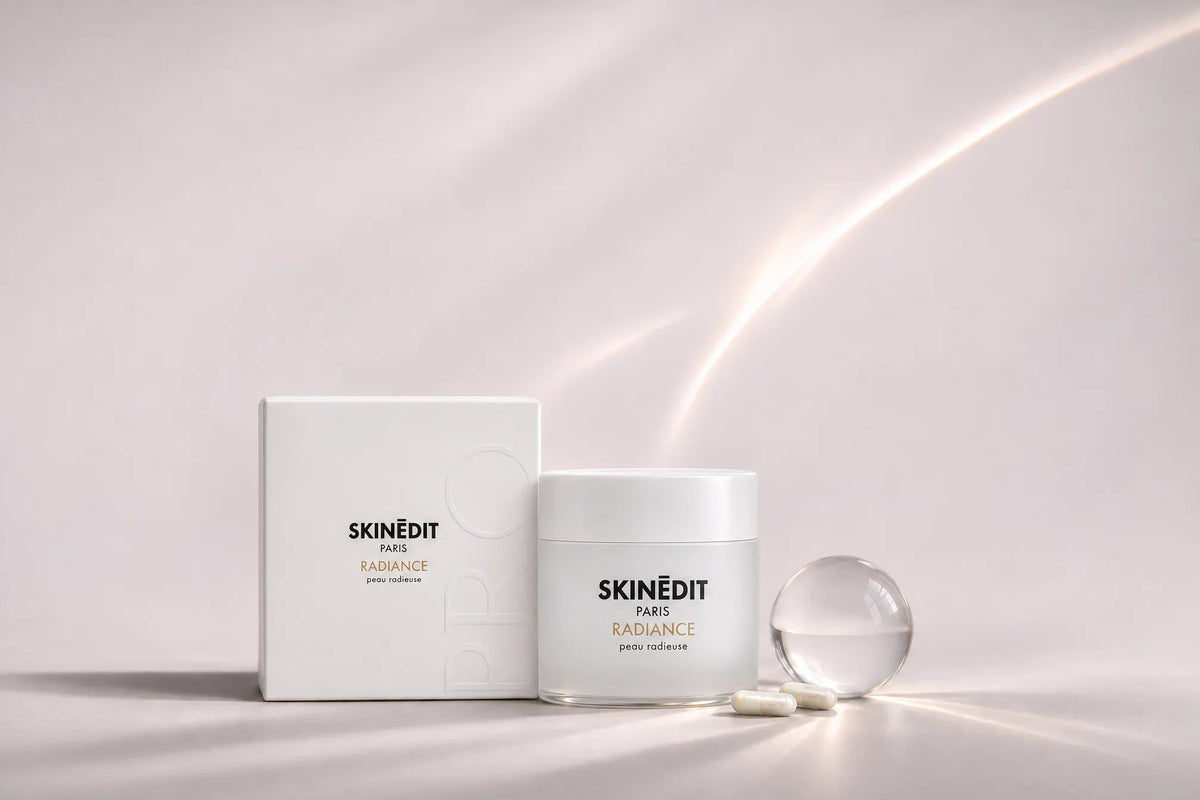
For those who want to explore skincare beyond what they apply to the face, RADIANCE by SKINĒDIT PARIS offers a two-capsule daily ritual. Formulated and manufactured in France, it brings together ingredients including BELIGHT³™, liposomal glutathione and L-cystine in a complexion-focused formula.
Its place in a considered beauty routine begins with those formulation choices and a daily format that adds no topical layer. Explore the ingredients, precautions and available research before deciding how it fits your habits.
Keep the evidence distinct: published BELIGHT³™ studies concern that ingredient and selected pigmentation outcomes. They do not establish that the finished RADIANCE formula treats post-acne marks, acne or scars. RADIANCE does not replace sunscreen or dermatological care. [4]

When should you see a dermatologist?
Ask for advice if breakouts continue, scars are developing or your routine is causing irritation. An unusual mark that changes, bleeds or cannot clearly be linked to a previous pimple should also be examined before using brightening treatments. You do not have to wait for the concern to become severe.
Questions about post-breakout marks
Can a dark-spot serum fill a depressed acne scar?
Colour and texture are different goals. A dermatologist can separate pigmentation from scarring and discuss appropriate options. [5]
Should I exfoliate more often to speed things up?
Additional irritation can prolong the problem. Keep the routine comfortable and seek advice before increasing frequency or combining several actives. [2,7]
Has RADIANCE been tested specifically on post-acne marks?
We do not present BELIGHT³™ ingredient studies as a trial of RADIANCE for post-inflammatory hyperpigmentation. Explore the formula for its approach to a beauty ritual, with that evidence boundary clearly in mind.
Choose your ritual with precision
Understanding your marks helps you make more useful choices. To explore an ingestible dimension of your routine, discover RADIANCE, its French formulation and product precautions.
If your marks did not follow breakouts, our guide to persistent dark spots explores other patterns.
Sources
- American Academy of Dermatology: acne scars and flat marks.
- DermNet: post-inflammatory hyperpigmentation.
- American Academy of Dermatology: fading dark spots in darker skin tones.
- Tursi et al., Cosmetics, 2025: controlled study of BELIGHT³™. Funded by the ingredient supplier; distinct from the finished RADIANCE formula.
- DermNet: acne scarring and associated colour changes.
- American Academy of Dermatology: why to avoid popping pimples.
- Acne-induced Post-inflammatory Hyperpigmentation: From Grading to Treatment, 2025.
Published by SKINĒDIT PARIS, the maker of RADIANCE. General information, not an individual diagnosis. Food supplement: follow the label directions and precautions. Seek professional advice when taking medication, during pregnancy or while breastfeeding. Supplements do not replace a varied, balanced diet or a healthy lifestyle.

Intelligence is the editorial journal of SKINĒDIT PARIS, exploring skincare, ingredients and the evidence behind beauty routines.
About the author