Does biotin work for hair growth? Biotin can help when hair changes are caused by a genuine deficiency. For people with adequate biotin status, research has not established that taking extra biotin reliably increases hair growth or thickness. The useful distinction is between meeting a nutritional need and treating the cause of thinning. High doses can also interfere with certain blood tests.[1][2]
A widening part or more hair in the shower can make a “hair vitamin” feel like a practical first step. Biotin is familiar, widely available and often prominent on the label. But choosing a useful hair routine starts with two questions: what does your hair need, and what has the formula actually been shown to do?
What does biotin do for hair?
Biotin, also called vitamin B7, helps enzymes involved in the metabolism of fats, carbohydrates and amino acids. It is an essential nutrient, and deficiency can cause hair thinning alongside other symptoms. That explains its association with hair health.[2]
However, a nutrient's essential role does not establish that an extra dose improves hair once requirements are met. For someone already getting enough biotin, the reason for shedding may lie elsewhere.

What do studies say about biotin and hair growth?
A 2026 systematic review of ten human studies found no consistent improvement in objective hair-growth outcomes from biotin taken alone. Positive findings often involved combinations of ingredients or treatments, making biotin's individual contribution difficult to establish.[1]
A 2024 review reached a similar conclusion. Only three studies met its criteria for oral biotin and hair growth or quality, excluding case reports and case series. Its strongest study found no significant difference between biotin and placebo; the other studies involved specific medical contexts and had important limitations.[3]
These findings leave room for better research. They do not justify promising that biotin will thicken normal hair or treat common hair-loss conditions simply because it appears in a supplement.
When might biotin supplementation help?
Replacing a true deficiency can help the hair changes associated with that deficiency. Clinically meaningful deficiency is uncommon in people eating a varied diet. It can occur with rare inherited disorders, significant nutritional problems or impaired absorption; some medications can also affect biotin status.[2][3]
Hair loss alone does not diagnose biotin deficiency. Serum biotin is also an imperfect marker of marginal deficiency. A clinician should interpret suspected deficiency alongside your diet, symptoms, medical history and medications.[2]
How much biotin do you need?
The US adult Adequate Intake is 30 micrograms daily. This is a nutritional reference for total intake, including food, rather than a recommended supplement dose for hair growth.[2]
| Biotin amount | In micrograms | Compared with 30 mcg |
|---|---|---|
| 0.03 mg | 30 mcg | 1× |
| 1 mg | 1,000 mcg | About 33× |
| 5 mg | 5,000 mcg | About 167× |
| 10 mg | 10,000 mcg | About 333× |
No evidence-based high dose has been established for growing hair in adults who already have adequate biotin. A larger number on the label is therefore a poor way to compare hair supplements. Check the daily serving, the units and any overlap with other products you take.
Why does REVIVAL include biotin?
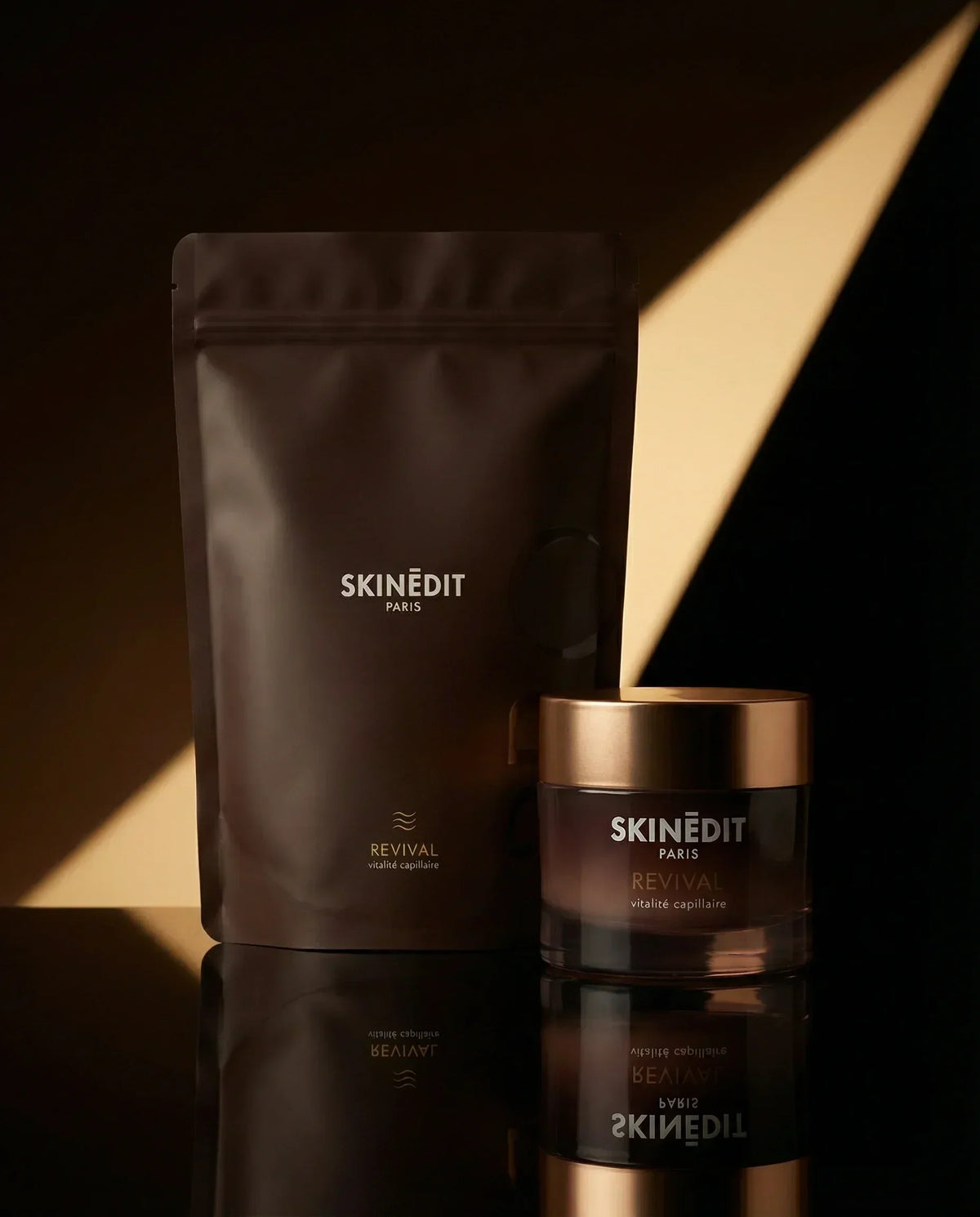
In SKINĒDIT REVIVAL, biotin forms part of the nutritional component of a broader formula that also includes AnaGain™ Nu pea-sprout extract, Cynatine® HNS keratin, L-cystine and zinc. The formulation explores hair biology through Signal · Cycle · Anchor · Fibre.
Biotin's presence reflects its nutritional role. Evaluating the formula also means looking at the other ingredients, the research behind them and how closely that research matches the product and your concern.
For example, a 90-day randomised, double-blind, placebo-controlled study of 50 women with stressed or damaged hair and nails reported improvements in selected hair-pull, hair-cycle and hair-strength measures with a Cynatine HNS complex. The tested supplement combined keratin with vitamins and minerals, including biotin.[4]
That is evidence about the studied complex. It cannot establish which ingredient produced the results, and it was not a trial of finished REVIVAL. REVIVAL is nutritional support for hair and density concerns; an underlying hair-loss condition may require its own treatment.
Explore the thinking behind the formula.
AnaGain™ Nu pea-sprout extract. Cynatine® HNS keratin. Supporting nutrients. Discover how REVIVAL brings them together, why each was selected and the research behind the formulation.
Can biotin affect blood tests?
Yes. High circulating biotin can distort certain laboratory results. Susceptible tests include some thyroid and hormone assays. The FDA has also warned about falsely low results in certain troponin tests used to help diagnose heart attacks. The effect depends on the test; some assays have been redesigned to reduce interference.[2][5]
Before blood testing, tell the clinician and laboratory about all supplements you take, including hair formulas and multivitamins. Bring the label or a photograph showing the daily biotin amount.
Follow their instructions about whether and when to pause it. There is no single pause interval suitable for every situation: dose, time since the last dose, kidney function and the assay all matter.[3]
If you need urgent medical care, seek it immediately and disclose the supplement. Do not delay care while waiting for biotin to clear.
What should you check before choosing a hair supplement?
Start with the pattern and timing. Sudden shedding, gradual thinning and breakage can call for different responses. A dermatologist can assess the scalp and arrange targeted tests when the history suggests a medical or nutritional cause.[6]
- For a new or unusually heavy shed: use our guide to hair shedding at 40 to organise the questions to discuss.
- For comparing formulas: read how to choose a supplement for women's hair thinning, including the difference between ingredient research and product evidence.
- After childbirth: follow the separate guide to postpartum hair shedding; a normal postpartum shed has its own recovery pattern.
Persistent or progressive thinning, bald patches, or a painful or inflamed scalp deserve assessment. A useful routine can include nutritional support, but the diagnosis should guide expectations and any treatment.
Frequently asked questions
How long does biotin take to work for hair?
There is no established response timeline for people who are not deficient, because benefit has not been reliably demonstrated. If deficiency is identified, recovery depends on its cause, correction and the hair cycle.
Is 10,000 mcg better than 5,000 mcg for hair growth?
A higher dose has not been established as more effective in people with adequate biotin. These amounts equal 10 mg and 5 mg respectively, and both can be relevant to laboratory-test interference.
Should I stop taking biotin if my hair is still shedding?
Review why you started it and whether deficiency was ever identified. Continued shedding warrants reassessment rather than automatically increasing the dose. If biotin was prescribed for a diagnosed condition, discuss changes with the prescriber.
Does a study of a formula containing biotin prove biotin works?
No. When several ingredients are tested together, their individual contributions cannot usually be separated. Check the exact formula, study population, comparison group and outcomes before applying the findings to another product.
Can I take REVIVAL alongside another biotin supplement?
Check both labels and discuss the combined amounts with a pharmacist or clinician. Adding a separate high-dose biotin product has no established hair-growth advantage when biotin intake is already adequate, and it increases your total exposure.
References
- Moltó-Balado P, Simeó-Monzo A, del Barrio-Gonzalez A. Effectiveness of biotin supplementation for hair growth in patients with alopecia: a systematic review. Dermato. 2026;6(2):17.
- NIH Office of Dietary Supplements. Biotin: fact sheet for health professionals.
- Yelich A, Jenkins H, Holt S, Miller R. Biotin for hair loss: teasing out the evidence. Journal of Clinical and Aesthetic Dermatology. 2024;17(8):56–61.
- Beer C, Wood S, Veghte RH. A clinical trial to investigate the effect of Cynatine HNS on hair and nail parameters. The Scientific World Journal. 2014;2014:641723.
- US Food and Drug Administration. Biotin interference with troponin lab tests: assays subject to biotin interference.
- American Academy of Dermatology. Hair loss: diagnosis and treatment.


Jaouad Bentaguena is the founder of SKINĒDIT Paris. He researches and writes the SKINĒDIT Intelligence journal himself — working from peer-reviewed literature and alongside the scientists and clinical partners behind each protocol, to translate deep skin and hair science into something clear enough to act on.
About the author